






Humiliation is a serpent with poisonous fangs. The toxic teeth of an unjustified humiliation sting the victim with a particularly sharp edge, leaving him writhing in a pain that takes an eternity to heal, if it heals at all. The mind bleeds amidst groans of unbearable agony and futile rage. But often the worst thing about humiliation is that the person at the receiving end has to suffer alone, unable to share the anguish with anybody else. With time, the person learns to live with the trauma.
Sriman had been subjected to one such unwarranted indignity this morning. Despite his earnest efforts to come to terms with it, he had not been able to overcome it. What did he do to deserve it? The question rankling inside him ever since the occurrence of the incident had left him stumped. So much so that he had refrained from going out for work post-lunch.
Bishan Basu was Sriman’s go-to person in all crises that indicated no potential closure. Sriman was now in Bishan-da’s room. Sriman’s account of the incident had stunned Bishan too.
A wild rage was simmering inside Bishan, ever since hearing about it. The fury was so savage that it could be satiated only if he could tightly slap the perpetrator on Sriman’s behalf.
Jnuiphool returned a little later. Like most international academicians, she too bore an ambidextrous streak. A few days ago, she was working on a research project on lullabies while extensively studying the evolution of fairy tales among the Totos. In the middle of all this, she wrote and delivered a paper on a comparative discourse on Netaji Subhas Chandra Bose and Charu Majumdar at a sociological research institution.
Ever since being introduced to Sriman, Jnuiphool had developed a new research interest: gig workers. But Bishan had never intended to introduce her to Sriman in the first place because he was sure she would make Sriman a test case for another bout of arid theorising. “Change the situation, if you can, don’t waste time in dry discourse,” Bishan had told her. “Sriman is not your lab rat. Your research won’t make any difference to his situation,” he had warned her matter-of-factly.
Jnuiphool sensed the grim mood prevailing in the room as soon as she entered, right in the middle of Sriman and Bishan’s conversation. “What happened? Anybody ill?” she asked, to lighten the air. “Yes, I am ill because I have written a poem after a long time,” Bishan chipped in, camouflaging the humorous thrust of the comment with a poker face. “What!?” Jnuiphool had not expected such a bizarre reply.
Without responding to her stark surprise, Bishan started to recite the poem in a voice sacred in its sonority –
On her birthdays, I send her the ritual moon,
Moon-drops drip into her phone,
The smiley-moon is born, day and night;
With consistent precision, it wanes
And with a mystic muteness,
While our days
Oscillate between polar extremes!The smiley-moon morphs into an icon,
Lighting her palm-peripheried utopia,
The moon of the first night glides
Across the mundane arc of mortality.
My palm slides the lucent moon,
Lending a glow to my pallid pocket.
As I descend to the edge of mist,
Life-saving drugs cost a universe,
And the world spits spasms of blood.
Too esoteric, the meaning of the lines eluded Sriman, but the melodramatic inflection with which Bishan pronounced the concluding line made him feel its visceral agony.
“Brilliant!” Jnuiphool was amazed. “The smiley-moon … wonderful! You should’ve continued writing.”
Bishan’s response was a smile followed by silence.
By the way, this was not the first instance where Bishan had imagined the moon as a smiley. Sriman had heard him conjure the image earlier as well. But he refrained from pointing it out to Jnuiphool.
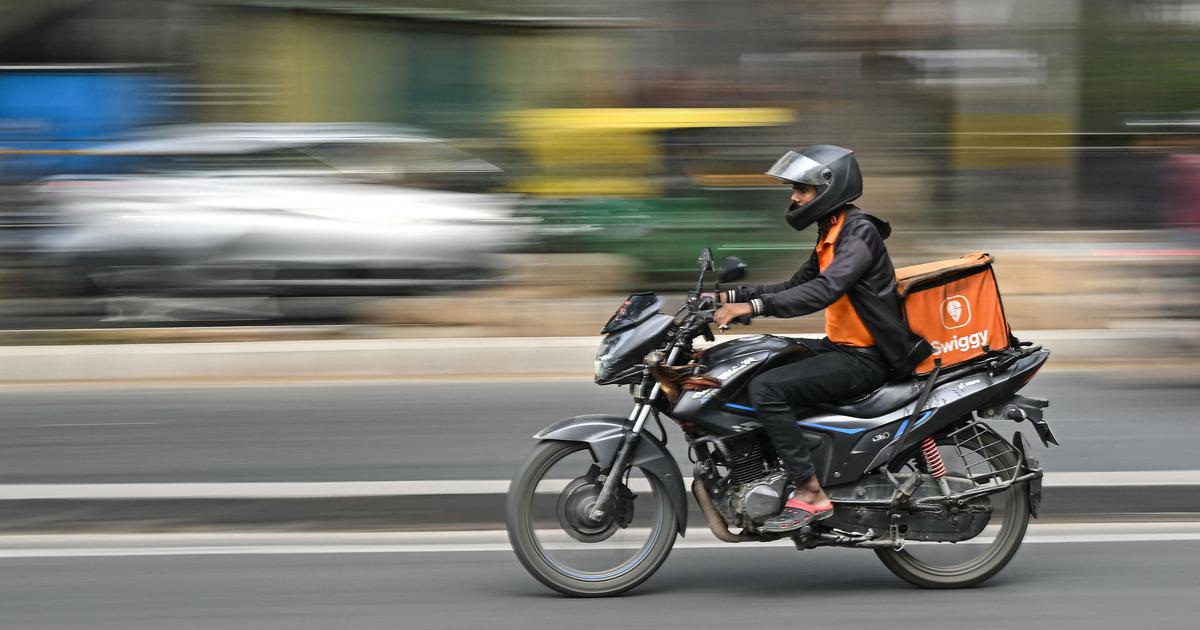
Jnuiphool had jotted down a lot of data from her interaction with food delivery riders of Salt Lake, Rajarhat, Barasat. She brought out her diary.
“Is this your field study?” Bishan asked.
“Sort of. It documents the genesis of a unique working class. I have spoken to 15 of them. Dhananjay Bar of Keshtopur, Sameer Singh of Gourangapur, Sunita Agarwal of Rajarhat, Aloke Choudhury of Narkelbagan, Babu De of Sukantanagar. Their’s a strange world where everybody labours from dawn to dusk. I found Marx’s Alienation Theory at work,” Jnuiphool elaborated.
The obscure allusion to Marx’s Alienation Theory was Greek to Sriman. He nodded in assent, nevertheless. Bishan understood Sriman’s predicament.
“So, Jnui, you mean to say that Marx’s theory of the detachment between the labourer and the product has affected these food delivery riders too?” Bishan’s rhetorical question was designed to make things easier for Sriman.
“Exactly. The detachment infecting the shopkeeper has spilled over to the gig worker also; every single delivery rider complained of facing humiliation from customers. One of them even lamented there is none to care for them. They have nothing to do with the commodity they deliver yet they must bear the brunt. Hence, the alienation,” Jnuiphool said.
“There’s a mismatch because the majority you have interviewed are from the suburbs or the villages, yet to attune themselves to the roads, lifestyle, dialect of the city. Not that they have none to care, they must look after themselves. They don’t have any union either because the nature of their work makes unity impossible. Moreover, you won’t find them on the official payroll of any particular company. Their relationship with the company is tenuous at best,” Bishan explained the crux of the gig worker’s predicament.
“Tenuous. That’s the word. I couldn’t have put it better. It’s a loophole inherent in the capitalist society.”
“But, Jnui, repression will always lead to retaliation; it’s the law of nature.”
Although he was minutely listening to the highfalutin exchanges between Bishan and Jnuiphool, Sriman was finding it difficult to come to terms with his disgrace. “This insult is too upsetting to forget,” he suddenly blurted out, interrupting Bishan.
“Someone insulted you?” Jnui instantly asked. “Tell me about it.”
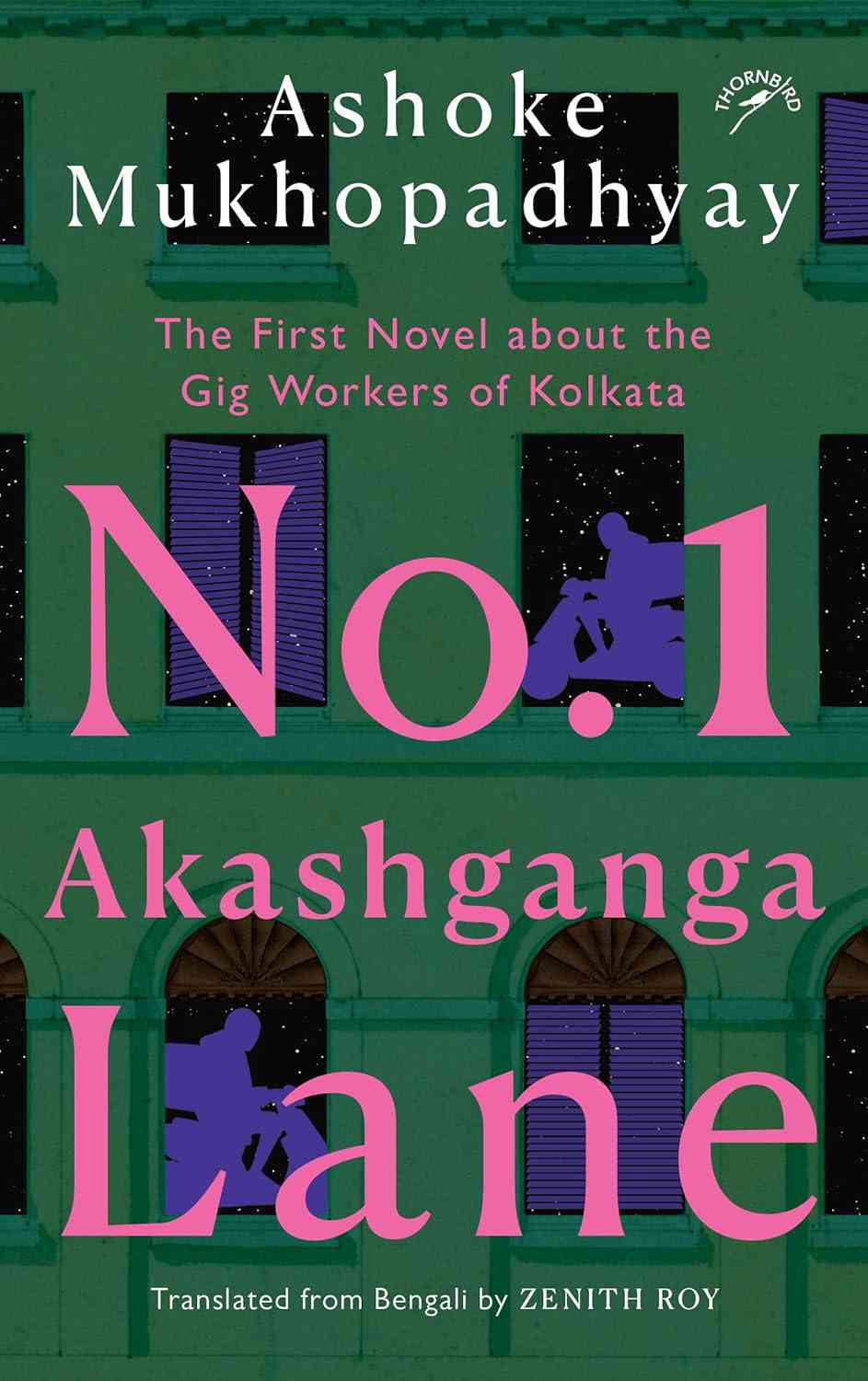
Excerpted with permission from No. 1 Akashganga Lane: The First Novel about the Gig Workers of Kolkata, Ashoke Mukhopadhyay, translated from the Bengali by Zenith Roy.
